
One ocean, four coasts
The building is organised around a single idea: one large tank at the centre and four habitats around it, separated from it only by large sheets of acrylic so it all reads as a single ocean.
-
North Atlantic
A rocky, cold-water coast
The Atlantic habitat recreates a rocky northern shoreline, with seabirds such as puffins on the rocks above the waterline and the central tank visible beyond the glass.
-
Antarctic
A cold coast and its penguins
The Oceanário's Southern Ocean habitat recreates the Antarctic coastline and is home to its penguins.
-
Temperate Pacific
Kelp forest and sea otters
Kelp forest stands in for the temperate Pacific coast, and this is where the Oceanário's sea otters live — for many visitors, children especially, the highlight of the visit.
-
Tropical Indian Ocean
A warm coral reef
Built around tropical coral reefs and the small, bright fish that live on them — the warm-water counterpart to the cold Antarctic and Atlantic coasts.
Which animals are on show in each habitat can change over time, so treat the species named here as typical rather than certain.
Expo '98 and the building on its own pier
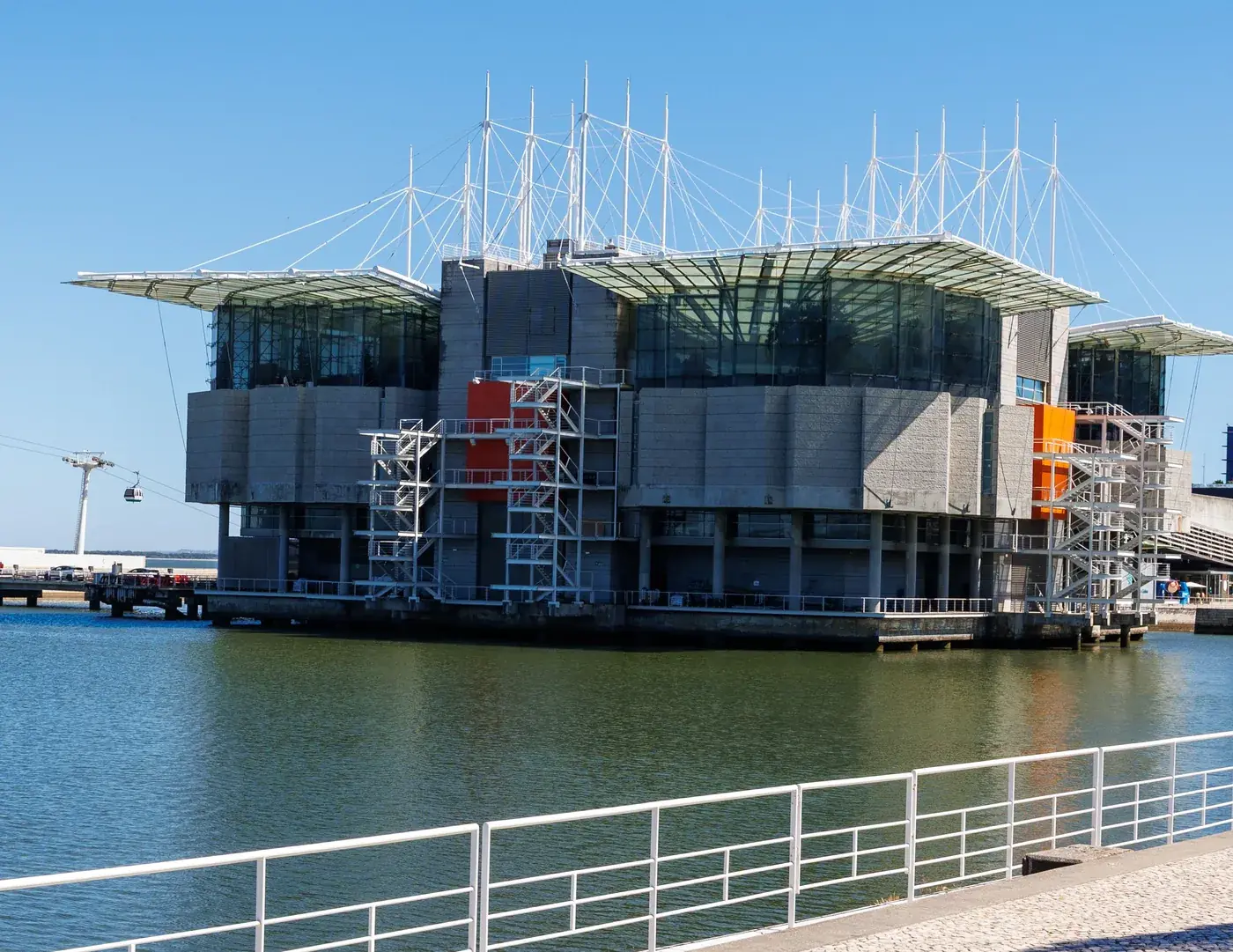
A fair about the oceans
The Oceanário was built as the Oceans Pavilion of Expo '98, the 1998 world exposition held under the theme 'The Oceans, a Heritage for the Future'. When the fair closed on 30 September, its riverside site reopened that October as Parque das Nações, the district the aquarium still stands in today.
Designed by an aquarium specialist
The building was designed by the American architect Peter Chermayeff, who has designed aquariums around the world, including Osaka's Kaiyukan. It stands on a pier in an artificial lagoon beside the Tagus estuary, and is often said to resemble an aircraft carrier.
One huge tank at the centre
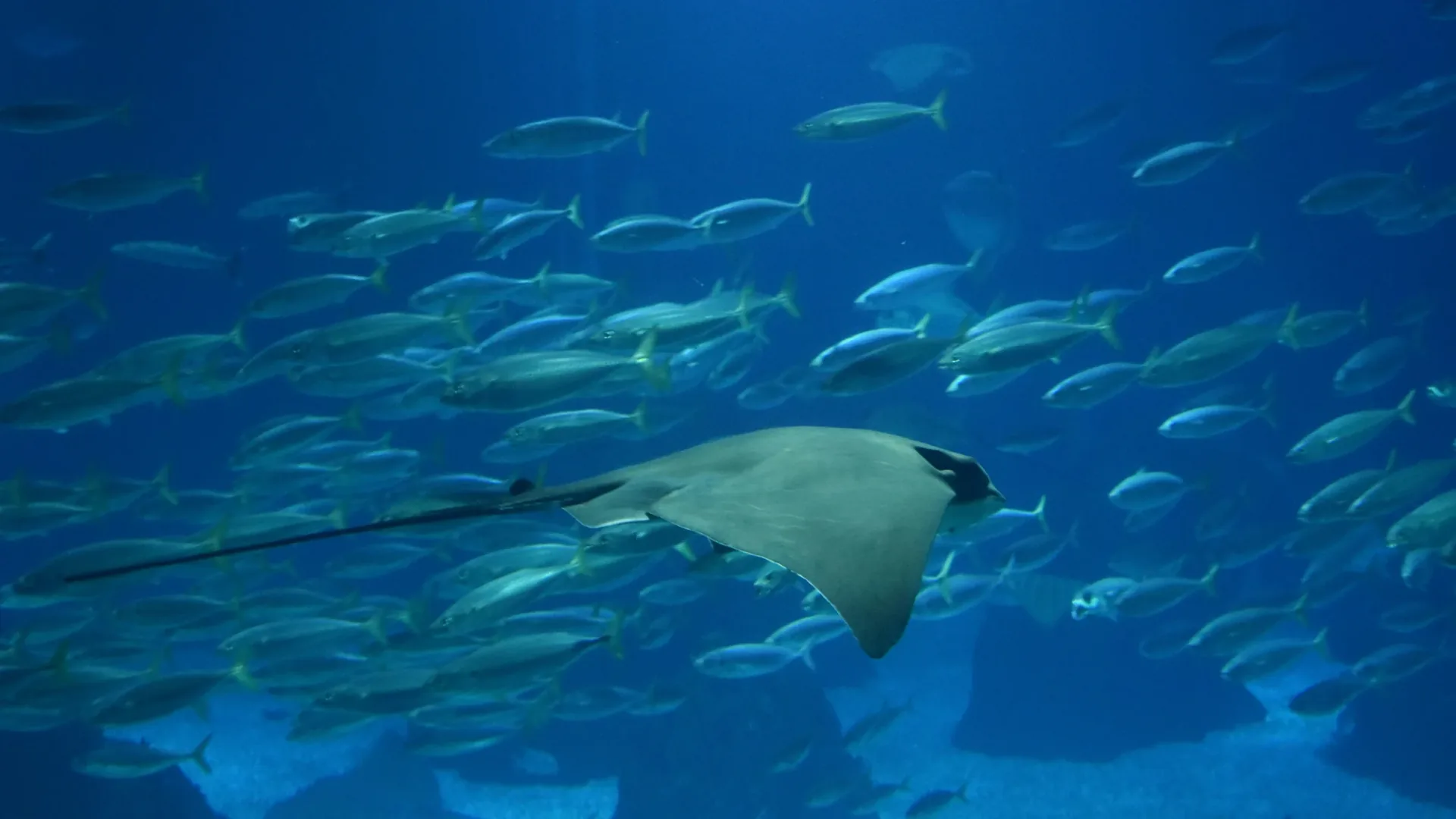
At the middle of the building is the central tank: around five million litres of seawater, seven metres deep, holding roughly a hundred species on its own. Four habitats ring it, separated from the main tank only by large acrylic panels, which gives the illusion of one continuous ocean.
A conservation centre first
The Oceanário presents itself as more than an aquarium — a centre for marine conservation with education programmes for schools — and it draws around a million visitors a year.
At a glance
- Opened
- 1998, built for Expo '98 on a pier in a lagoon beside the Tagus
- Central tank
- About five million litres and seven metres deep, ringed by four habitats
- Collection
- About 8,000 animals of more than 500 species, by the Oceanário's own count
- Getting there
- Metro Red Line to Oriente, then about ten minutes on foot through Parque das Nações
Guides to the visit
Getting there
How to get to the Oceanário de Lisboa
The metro route from central Lisbon, the airport run, buses and driving in.
Read the guide →Timing
The best time to visit the Oceanário de Lisboa
Which times of day are quiet, which days fill first, and why the weather outside matters as much as the season.
Read the guide →With children
The Oceanário de Lisboa with children
Why it works well as a family morning in Lisbon, and how to keep it that way with young children in tow.
Read the guide →Inside
What to see at the Oceanário de Lisboa
The central tank, the four habitats around it, and the animals worth slowing down for.
Read the guide →Around the Oceanário
Things to do in Parque das Nações
The riverside district the Oceanário stands in — a cable car, a very long bridge, and an easy flat walk either side of your visit.
Read the guide →Questions people ask before they go
Is this the Oceanário's own website?
No. This is an independent visitor guide, not Oceanário de Lisboa or any of its own channels. For the operator's own site, including current hours and prices, see oceanario.pt.
How do I book tickets?
Through the Viator link on this page — Viator runs the checkout and takes your payment, not us. If a booking completes there, Viator pays this guide a referral fee; your total stays the same.
How do I get to the Oceanário de Lisboa?
Metro Red Line to Oriente, then about ten minutes on foot through Parque das Nações. Oriente is three stops from Lisbon Airport on the same line.
Is the Oceanário good for young children?
Yes — the route has ramps and lifts for strollers, and babies up to two years old go in free. The sea otters and the central tank are the two things children tend to remember afterwards.
What's the best time of day to go?
At opening, or later in the afternoon before last entry, gives the clearest view of the glass. Weekend mornings and rainy days tend to bring the biggest crowds, since the Oceanário is an obvious indoor plan when the weather turns.
What will I actually see inside?
One large central tank holding around a hundred species on its own, with four habitats — North Atlantic, Antarctic, temperate Pacific and tropical Indian Ocean — built around it and separated from it only by acrylic panels.
Is the building accessible for wheelchairs and strollers?
Yes. The Oceanário says its route has ramps and lifts for wheelchair users and families with strollers — a contrast with the hills and cobbles of central Lisbon.
Where can I check current opening hours and prices?
On the Oceanário's own site, oceanario.pt, which keeps its current hours, age bands and prices. We don't quote prices here.